
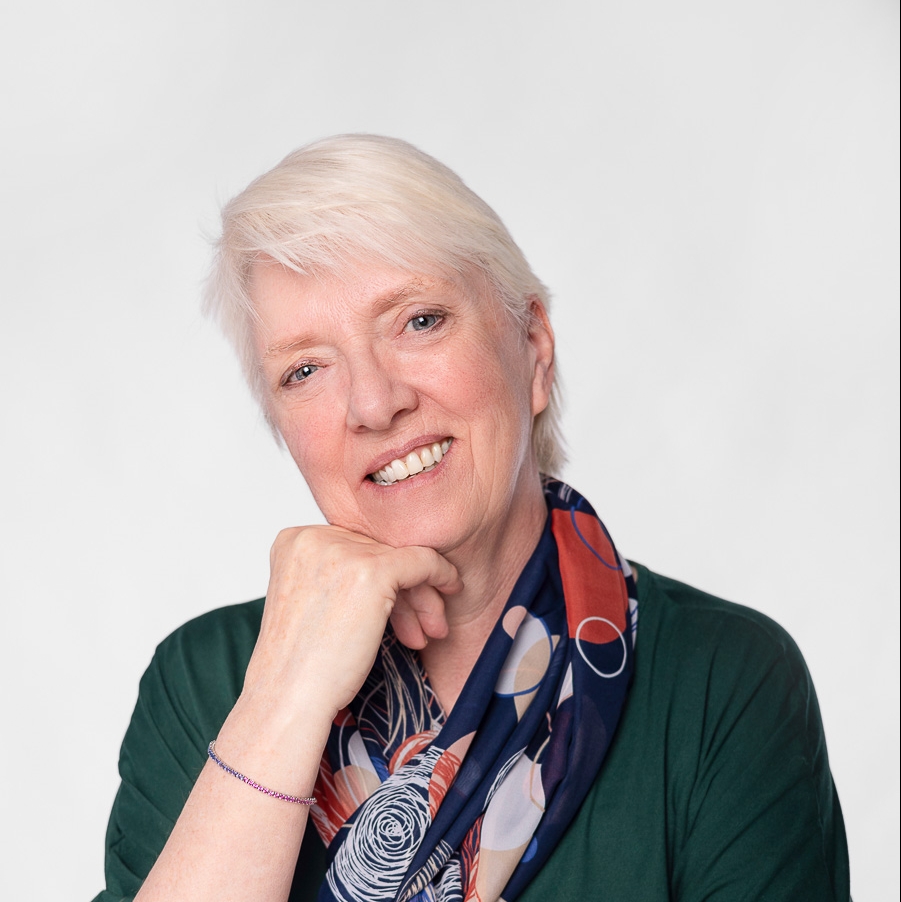
Katrin Becker is a writer, educator, systems thinker, game designer, and farmer whose work ranges from education and technology to memoir, rural life, human behaviour, and the peculiar things that happen when carefully constructed theories encounter reality.
She spent more than 35 years teaching computer science, game design, digital game-based learning, technical writing, and related subjects, and has written extensively about games, learning, instructional design, and technology. Her books include Gamification 101: How to Bring Joy Back to Learning By Making Your Classroom Gameful (2024) and Choosing and Using Digital Games in the Classroom (Springer, 2016). Her academic background includes graduate degrees in computer science and educational technology and formal training in serious game design and instructional design.
Katrin has also spent more than three decades on a small farm in the Alberta foothills, raising children, Rex rabbits, poultry, dogs, cats, and assorted other creatures. The farm has become both subject matter and an unusually persistent source of evidence that real systems are messy, adaptive, nonlinear, and generally unimpressed by theory.
Her current writing moves increasingly between memoir, narrative nonfiction, humour, systems thinking, and explorations of how people make sense of themselves and the worlds they inhabit. Current projects include 10,000 Eggs, a collection of true stories about life on a small Alberta farm; The Happy Healer Workbook, a darkly humorous exploration of recovery from coercive control; Library Theory of Mind, a model of the mind as a living library; Enoughness, an exploration of what changes when we ask “What is enough?”; and It All Makes Sense Now, a memoir about immigration, family, trauma, autism, and discovering late in life that apparently unrelated pieces of a life may have been telling a coherent story all along.
Identified as autistic in her sixties, Katrin found a new framework for something she had been doing all her life: standing slightly outside systems, examining their assumptions, and asking why they work the way they do—and whether they might work better another way.
After 45 years of teaching, research, design, writing, farming, and making things, she has begun calling this stage of her life “professing”: putting what she has learned into the world in whatever form best suits the idea, whether that turns out to be a book, an essay, a story, a game, a model—or something that hasn't acquired a respectable name yet.