
Creating Mentorship for Deaf and Disabled Writers is a mentorship program designed to support the creative growth and professional development of Deaf and disabled writers. The Writers’ Union of Canada is committed to building opportunities and cultivating space where Deaf and disabled writers can share tools, strategies, feedback, and knowledge. The program includes one-on-one mentorship and a virtual networking session with industry professionals for mentors and mentees.
IMPORTANT DATES
Mentee Applications Open: September 29, 2026
Application Deadline: October 26, 2026, 11:59 pm PT / 2:59 am ET
Applicants Notified: December 2026
Mentorships Completed: January to March 2027
Networking Session: March 25, 2027, 11:00 am PT / 2:00 pm ET
Mentee Applications Open: September 29, 2026
Application Deadline: October 26, 2026, 11:59 pm PT / 2:59 am ET
Applicants Notified: December 2026
Mentorships Completed: January to March 2027
Networking Session: March 25, 2027, 11:00 am PT / 2:00 pm ET
MENTORSHIP FORMAT
Mentors are professional writers who are Deaf and/or disabled. Each mentor will choose one mentee to work with. Mentorships will last approximately 10 hours, which will include the mentor’s time reviewing materials and preparing for discussion. Mentors and mentees will have up to an eight-week period for discussion (online discussion, email, or other technology as outlined in the mentorship application and agreed upon with the mentor), revisions, etc. Meeting times to be determined by the mentor and mentee and to be completed in advance of the final networking session.
Mentors are professional writers who are Deaf and/or disabled. Each mentor will choose one mentee to work with. Mentorships will last approximately 10 hours, which will include the mentor’s time reviewing materials and preparing for discussion. Mentors and mentees will have up to an eight-week period for discussion (online discussion, email, or other technology as outlined in the mentorship application and agreed upon with the mentor), revisions, etc. Meeting times to be determined by the mentor and mentee and to be completed in advance of the final networking session.
NETWORKING SESSION
Following the conclusion of the mentorship period, all mentors and mentees will be invited to attend an online networking and professional development session that will include industry representatives for a facilitated discussion and information sharing.
Following the conclusion of the mentorship period, all mentors and mentees will be invited to attend an online networking and professional development session that will include industry representatives for a facilitated discussion and information sharing.
MENTEE TESTIMONIAL
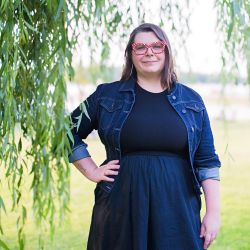
“Being selected as a mentee in the Creating Mentorship for Deaf and Disabled Writers program changed my life! Working with Miranda Newman, a mentor who understood the limitations and strengths of my disability, and who understood how living with a disability translates into the practice of being a writer, was the first time I really felt seen and heard as an emerging writer. There was a strong focus on my writing throughout the program, but also on how to navigate the professional writing world while having a disability, and how this can look different. I appreciated these conversations so much. They gave me the confidence that I can be a writer, even when I have to take a break from writing for my mental health. Even when my flare ups are too bad for me to sit at my computer. I am still a writer. This mentorship brought me the beauty of community, and helped me gain that confidence that I needed to submit my pieces for publication and to national contests. Without this mentorship, I would not be where I am, or the writer I am today. I am beyond grateful for this program and would encourage all deaf and disabled writers to apply! Take the leap! Change your life! Write amazing things with the support of amazing people! You never know where it may lead you.”
— Jenna Timmons-Oikawa, 2025 mentee, and winner of the 2026 CBC Nonfiction Prize.
MENTORS
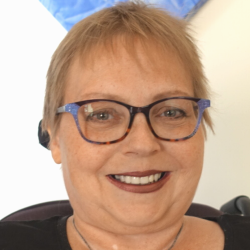
Lene Andersen is an award-winning writer, health and disability advocate, and photographer. She writes books that centre the lived experience of disability and chronic illness, including two published nonfiction books on living well with chronic illness, and a prose poem on chronic pain, and is currently writing her first novel. Lene has an MSW with a background in human rights and health reporting, and her writing is informed by these perspectives, as well as her own experience with lifelong chronic illness and disability. She lives in Toronto with a pack of cats and too many books. Photo: David Govoni.
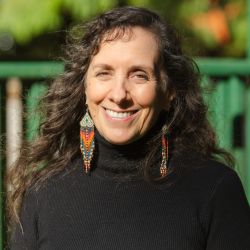
Jenn Ashton is an award-winning Sḵwx̱wú7mesh author, visual artist, filmmaker, and historian. Her most recent book, Growing My Way Home: Stories of Resilience and Care (Talonbooks, 2026), was released to critical acclaim and has already received an honourable mention in Indigenous Voices from the Sunshine Coast Writers and Editors Society’s Book Awards for BC Authors. She is an authenticity reader for several leading publishing houses in Canada and the U.S. and a doctoral researcher at the University of Edinburgh’s School of Divinity. Photo: CBR Photography.
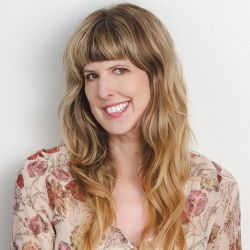
Kate Gies is a writer and educator living in Toronto, where she teaches creativity-based and trauma-informed courses at George Brown Polytechnic. Her writing has appeared in The Globe and Mail, The Walrus, The Malahat Review, The Humber Literary Review, Hobart, and the Best Canadian Essays 2024 Anthology. Her memoir, It Must Be Beautiful to Be Finished, about her childhood medical experiences related to a missing ear, was named a best book of 2025 by CBC Books and the Winnipeg Free Press. Photo: Will O’Hare.
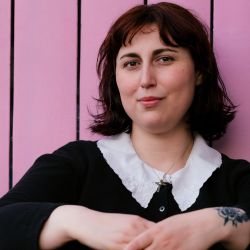
Sydney Hegele is the author of Bird Suit (Invisible Books, 2024) and The Pump (Invisible Books, 2021). They are the winner of the ReLit Literary Award for Short Fiction, and a finalist for the Sunburst Award for Excellence in Canadian Literature and the Trillium Book Award. Their essays have appeared in the Toronto Star, Catapult, Electric Literature, and many others. Their essay collection Bad Kids: A Polyphony is forthcoming with Invisible Books in 2028. They live with their husband and French Bulldog on Treaty 13 Land (Toronto). Photo: Ponder Photography.
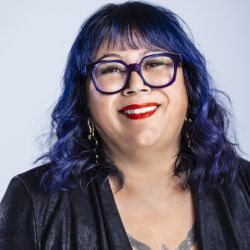
A Governor General finalist in nonfiction, Rowan McCandless is the Black and biracial author of Persephone’s Children: A Life in Fragments (Dundurn Press, 2021). She writes from Calgary which is located on Treaty Seven territory. Her award-winning fiction and creative nonfiction appear in print, online journals, and anthologies; most recently a contributor to The Disability Gains anthology and Rose Metal Press: A Field Guide to the Lyric Essay. She is the creative nonfiction editor with The Fiddlehead and the First Vice-Chair of The Writers’ Union of Canada.
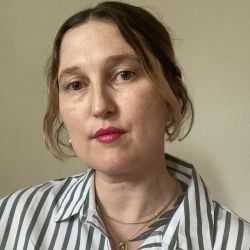
Emma McKenna is a feminist, bi, and disabled writer. She received her PhD in English and Cultural Studies from McMaster University. Emma is the author of the poetry books Gold Star and Chenille or Silk. Recently, her poetry has been published in The Fiddlehead: The Disability Issue, Eavesdrop Magazine's Our Queer Histories Anthology, and FeelsZine: The Disability Issue. Born in Duncan, British Columbia, and raised in Alberta and Southern Ontario, she currently lives in the Waterloo Region with her husband and two Shih Tzus.
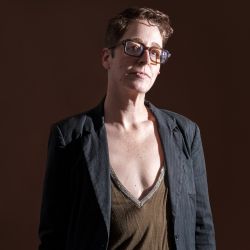
Charlie Petch (they/he) is a disabled & transmasculine multidisciplinary artist. Their debut poetry collection, Why I Was Late (Brick Books), won the 2022 ReLit Award, and was named “Best of 2021” by The Walrus. Their new collection Infinite Audition, launched in Fall 2025 with Brick Books. Petch received a Golden Beret Spoken Word Prize from the League of Canadian Poets. Their play No one’s special at the hot dog cart debuted in 2024 with Theatre Passe Muraille and Public Energy. They write plays, librettos, poems, and music and perform their work for audiences all over Turtle Island.
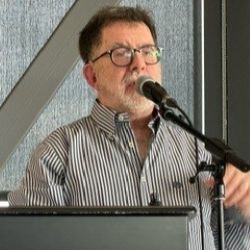
In 2027, Bruce Hunter’s new and selected poetry his fourteenth book will be published by Calgary’s Frontenac House, and his bilingual poetry collection, La bella sequenza, will appear in Italy. In 2025, his award-winning, best-selling novel In the Bear’s House, about a young deaf boy who finds love and redemption in the Canadian Rockies was rereleased by Frontenac House. In 2024, it was translated as Nella casa dell’orso in Italy. Deafened as an infant, and afflicted with low vision nearly all his life, Bruce’s poetry, fiction, reviews, interviews, translations, and creative nonfiction have appeared in over 100 blogs, journals, and anthologies internationally.
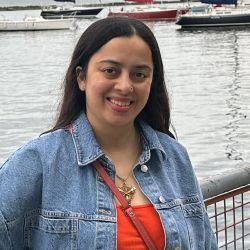
Ishaa Vinod Chopra is an award-winning author, RECE, and Guelph University MSc. thesis candidate in Critical Family and Kinship Studies with a collaborative specialization in Gender, Sexualities, and Bodies. She founded Finding Order in Disorder Foundation — a non-profit and arts collective — named after her memoir, seeking to explore projects such as hybrid podcasts, therapeutic dance, and community engagement for mental wellness. An immense source of inspiration has been her Indian classical dance Kathak teacher Guru Maneesha Tai Sathe ji, and her current research supervisor and mentor, Dr. Adam W.J.Davies.
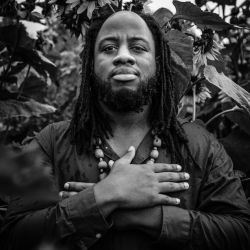
Brandon Wint is an Ontario-born poet, spoken word artist, educator, and filmmaker based in Vancouver. For more than a decade, Brandon has been a sought-after touring performance poet, having shared his work all over Canada, and internationally at festivals and showcases in the U.S., Australia, Jamaica, Latvia, and Lithuania. Brandon’s poems and essays have been published in The Ex Puritan, Event Magazine, Arc Poetry Magazine, and Black Writers Matter, among other places. Divine Animal (Write Bloody North, 2020) is his debut collection of poetry. In recent years, his films have screened at DOXA documentary film festival, Reelworld Film Festival, and Vancouver International Film Festival Centre.
Stay tuned! Additional mentors to be announced.
Lene Andersen is an award-winning writer, health and disability advocate, and photographer. She writes books that centre the lived experience of disability and chronic illness, including two published nonfiction books on living well with chronic illness, and a prose poem on chronic pain, and is currently writing her first novel. Lene has an MSW with a background in human rights and health reporting, and her writing is informed by these perspectives, as well as her own experience with lifelong chronic illness and disability. She lives in Toronto with a pack of cats and too many books. Photo: David Govoni.
Jenn Ashton is an award-winning Sḵwx̱wú7mesh author, visual artist, filmmaker, and historian. Her most recent book, Growing My Way Home: Stories of Resilience and Care (Talonbooks, 2026), was released to critical acclaim and has already received an honourable mention in Indigenous Voices from the Sunshine Coast Writers and Editors Society’s Book Awards for BC Authors. She is an authenticity reader for several leading publishing houses in Canada and the U.S. and a doctoral researcher at the University of Edinburgh’s School of Divinity. Photo: CBR Photography.
Kate Gies is a writer and educator living in Toronto, where she teaches creativity-based and trauma-informed courses at George Brown Polytechnic. Her writing has appeared in The Globe and Mail, The Walrus, The Malahat Review, The Humber Literary Review, Hobart, and the Best Canadian Essays 2024 Anthology. Her memoir, It Must Be Beautiful to Be Finished, about her childhood medical experiences related to a missing ear, was named a best book of 2025 by CBC Books and the Winnipeg Free Press. Photo: Will O’Hare.
Sydney Hegele is the author of Bird Suit (Invisible Books, 2024) and The Pump (Invisible Books, 2021). They are the winner of the ReLit Literary Award for Short Fiction, and a finalist for the Sunburst Award for Excellence in Canadian Literature and the Trillium Book Award. Their essays have appeared in the Toronto Star, Catapult, Electric Literature, and many others. Their essay collection Bad Kids: A Polyphony is forthcoming with Invisible Books in 2028. They live with their husband and French Bulldog on Treaty 13 Land (Toronto). Photo: Ponder Photography.
A Governor General finalist in nonfiction, Rowan McCandless is the Black and biracial author of Persephone’s Children: A Life in Fragments (Dundurn Press, 2021). She writes from Calgary which is located on Treaty Seven territory. Her award-winning fiction and creative nonfiction appear in print, online journals, and anthologies; most recently a contributor to The Disability Gains anthology and Rose Metal Press: A Field Guide to the Lyric Essay. She is the creative nonfiction editor with The Fiddlehead and the First Vice-Chair of The Writers’ Union of Canada.
Emma McKenna is a feminist, bi, and disabled writer. She received her PhD in English and Cultural Studies from McMaster University. Emma is the author of the poetry books Gold Star and Chenille or Silk. Recently, her poetry has been published in The Fiddlehead: The Disability Issue, Eavesdrop Magazine's Our Queer Histories Anthology, and FeelsZine: The Disability Issue. Born in Duncan, British Columbia, and raised in Alberta and Southern Ontario, she currently lives in the Waterloo Region with her husband and two Shih Tzus.
Charlie Petch (they/he) is a disabled & transmasculine multidisciplinary artist. Their debut poetry collection, Why I Was Late (Brick Books), won the 2022 ReLit Award, and was named “Best of 2021” by The Walrus. Their new collection Infinite Audition, launched in Fall 2025 with Brick Books. Petch received a Golden Beret Spoken Word Prize from the League of Canadian Poets. Their play No one’s special at the hot dog cart debuted in 2024 with Theatre Passe Muraille and Public Energy. They write plays, librettos, poems, and music and perform their work for audiences all over Turtle Island.
In 2027, Bruce Hunter’s new and selected poetry his fourteenth book will be published by Calgary’s Frontenac House, and his bilingual poetry collection, La bella sequenza, will appear in Italy. In 2025, his award-winning, best-selling novel In the Bear’s House, about a young deaf boy who finds love and redemption in the Canadian Rockies was rereleased by Frontenac House. In 2024, it was translated as Nella casa dell’orso in Italy. Deafened as an infant, and afflicted with low vision nearly all his life, Bruce’s poetry, fiction, reviews, interviews, translations, and creative nonfiction have appeared in over 100 blogs, journals, and anthologies internationally.
Ishaa Vinod Chopra is an award-winning author, RECE, and Guelph University MSc. thesis candidate in Critical Family and Kinship Studies with a collaborative specialization in Gender, Sexualities, and Bodies. She founded Finding Order in Disorder Foundation — a non-profit and arts collective — named after her memoir, seeking to explore projects such as hybrid podcasts, therapeutic dance, and community engagement for mental wellness. An immense source of inspiration has been her Indian classical dance Kathak teacher Guru Maneesha Tai Sathe ji, and her current research supervisor and mentor, Dr. Adam W.J.Davies.
Brandon Wint is an Ontario-born poet, spoken word artist, educator, and filmmaker based in Vancouver. For more than a decade, Brandon has been a sought-after touring performance poet, having shared his work all over Canada, and internationally at festivals and showcases in the U.S., Australia, Jamaica, Latvia, and Lithuania. Brandon’s poems and essays have been published in The Ex Puritan, Event Magazine, Arc Poetry Magazine, and Black Writers Matter, among other places. Divine Animal (Write Bloody North, 2020) is his debut collection of poetry. In recent years, his films have screened at DOXA documentary film festival, Reelworld Film Festival, and Vancouver International Film Festival Centre.
Stay tuned! Additional mentors to be announced.
HOW TO APPLY
Creating Mentorship for Deaf and Disabled Writers is a free mentorship program, but advance application is required to participate as a mentee. Space is limited. Mentee applications must be submitted online through Submittable. If you have any questions about the application process, or require an alternative application method, please contact Program Manager, Kristina Cuenca at kcuenca@writersunion.ca.
Application Deadline: October 26, 2026, 11:59 pm PT / 2:59 am ET
ACCOMMODATIONS & ACCESSIBILITY
Mentors and mentees will be asked to indicate any accommodations they require to participate in the program. The Union will make every effort to meet these accommodation needs.
Up to $100 will be available for individuals who require assistance completing the application form. To apply for such assistance, please send an email to kcuenca@writersunion.ca at least two weeks prior to the application deadline with the following information:
- a description of the barriers to accessibility that you will experience in completing the application, and how the funds you are requesting will remove them (maximum 250 words)
- a breakdown of accessibility expenses
- support documents: quotes for services (optional)
Up to $400 will be available for individuals who require support during the mentorship. When applying, please indicate your need for assistance and provide the following information:
- a description of the barriers to accessibility that you will experience during the mentorship, and how the funds you are requesting will remove them (maximum 250 words)
- a breakdown of accessibility expenses
- support documents: quotes for services (optional)
The Union recognizes the scarcity of ASL interpreters. When a mentor, mentee, or panelist requests ASL interpretation, the Union will make every effort to meet that need. Where no such accommodation has been requested, the Union will not include ASL interpretation to ensure that interpreters are available for those who do need an interpreter on that day.
A NOTE ON ARTIFICIAL INTELLIGENCE
Applicants are welcome to use standard spelling and grammar checks to polish their writing. However, the use of artificial intelligence (AI) tools to generate, rewrite, or edit written work is not permitted.
Applicants are welcome to use standard spelling and grammar checks to polish their writing. However, the use of artificial intelligence (AI) tools to generate, rewrite, or edit written work is not permitted.
A NOTE ABOUT LANGUAGE
The Union recognizes that each writer is unique and chooses their own language with which to self-identify. The language chosen for this program, and in all our work, is designed to be inclusive and based on our own research, learnings, and consultations with members of the Deaf and disabled community. We will continue to listen, consult, and modify as we move forward. We welcome your feedback as we develop our language, programs, and services.
Reference: Canada Council for the Arts Glossary.